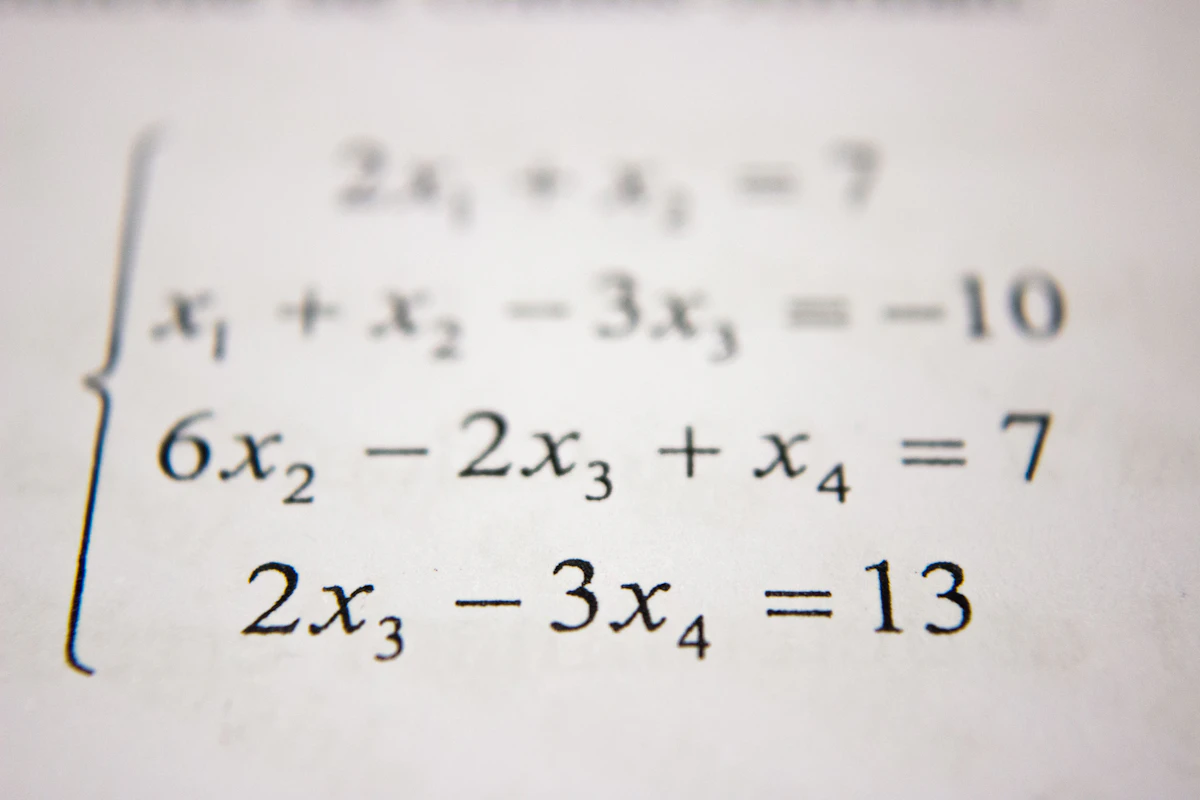
Differential equations are essential for engineering, physics, and applied mathematics. The subject involves many solution techniques and requires strong calculus skills. An online differential equations tutor can help you master this challenging but important subject.
Why Differential Equations Are Important
Differential equations model real-world phenomena in science and engineering. From population growth to electrical circuits, DEs describe how systems change over time. Understanding them is crucial for many STEM careers.
The subject builds heavily on calculus knowledge. If you have gaps in your calculus understanding, differential equations become much harder. A good tutor helps review necessary calculus while teaching new material.
Many solution techniques exist for different equation types. Knowing which method to use requires experience and guidance. A tutor helps you develop this problem-solving intuition.
Benefits of Online Differential Equations Tutoring
Online tutoring provides personalized attention for this advanced subject. Your tutor can identify your specific weak areas and address them effectively. One-on-one instruction is much more effective than large lecture classes.
Experienced tutors help you understand both theory and applications. They connect abstract mathematics to real-world problems. This context makes learning more meaningful and interesting.
Flexible scheduling fits tutoring around your busy college schedule. You can get help when you need it most, especially before exams. Regular sessions help you stay on track throughout the semester.
Key Differential Equations Topics
First-order ODEs include separable, linear, and exact equations. Each type requires different solution techniques. Your tutor teaches you how to identify and solve each type.
Second-order linear ODEs are central to many applications. Homogeneous and non-homogeneous equations require different approaches. Your tutor provides clear explanations and plenty of practice.
Systems of differential equations model complex phenomena. Matrix methods and phase plane analysis are important techniques. Your tutor helps you visualize system behavior.
Laplace transforms provide powerful solution methods. Understanding how to use transforms effectively requires practice. Your tutor guides you through the process step by step.
Partial differential equations extend concepts to multiple variables. Heat equation, wave equation, and Laplace's equation are important examples. Your tutor helps you understand separation of variables and other solution methods.
Solution Techniques
Separation of variables is a fundamental technique. Your tutor teaches you when this method applies and how to use it. Practice with various examples builds confidence.
Integrating factors solve certain first-order linear equations. Understanding how to find and use integrating factors is important. Your tutor provides systematic approaches.
Variation of parameters solves non-homogeneous equations. This technique can be complex but is very powerful. Your tutor breaks it down into manageable steps.
Series solutions handle equations that can't be solved in closed form. Power series and Frobenius methods are important techniques. Your tutor helps you understand when to use series solutions.
Applications and Modeling
Differential equations model many real-world phenomena. Population dynamics, electrical circuits, and mechanical systems all use DEs. Your tutor can explain applications relevant to your field.
Setting up differential equation models from word problems requires practice. Your tutor teaches you systematic approaches to modeling. Understanding the physical situation is crucial.
Interpreting solutions in context is as important as finding them. Your tutor helps you understand what solutions mean physically. This deeper understanding improves problem-solving.
Numerical Methods
Not all differential equations have analytical solutions. Numerical methods like Euler's method provide approximate solutions. Your tutor teaches you these important techniques.
Understanding when to use numerical methods is important. Your tutor helps you recognize equations that require numerical approaches. Software tools make numerical solutions practical.
Cost and Scheduling
Differential equations tutoring costs vary based on tutor qualifications. Rates typically range from $40 to $100 per hour. Tutors with advanced degrees charge higher rates.
Most students benefit from weekly sessions throughout the semester. This provides consistent support as you learn new material. Your tutor can recommend an appropriate schedule based on your needs.
Frequently Asked Questions
How much does a differential equations tutor cost?
Differential equations tutors typically charge $40 to $100 per hour depending on qualifications. Tutors with PhDs or extensive teaching experience charge higher rates. Package deals often reduce the per-session cost.
Is differential equations harder than calculus?
Differential equations builds on calculus knowledge and adds new techniques. It's generally considered more challenging than calculus. However, with good tutoring, most students can succeed.
How many tutoring sessions will I need?
Most students benefit from weekly sessions throughout the semester. This provides 12-15 sessions total. Your needs depend on your calculus background and course difficulty.
Can online tutoring really help with such an advanced subject?
Yes, online tutoring is highly effective for differential equations. Digital tools enable visualizations of solutions. The one-on-one attention addresses your specific difficulties effectively.
What background do I need for differential equations?
You need solid understanding of calculus, especially integration techniques. Some courses also require linear algebra. Your tutor can review necessary background material as needed.
How do I know if a tutor is qualified?
Look for tutors with degrees in mathematics, engineering, or physics. Graduate students and professors often make excellent tutors. Ask about their experience teaching differential equations.
Can tutors help with both theory and applications?
Yes, good differential equations tutors help with both mathematical techniques and applications. They ensure you understand the theory behind methods. This balanced approach leads to deeper understanding.
When should I start differential equations tutoring?
Start early in the semester to build a strong foundation. However, it's never too late to begin. Tutors can help you catch up and succeed even mid-semester.
Online differential equations tutoring provides the specialized support you need for this challenging subject. With expert guidance and personalized attention, you can master solution techniques and understand applications in your field.
Take the Next Step Towards Excellence
Join hundreds of top-scoring students in Delhi NCR. Get a customized learning plan and personalized guidance from India's best educators.
Book Your FREE Demo Class